
At an event we worked on, a delegate said something that has stayed with us ever since:
“I thought quiet rooms were for other people. But when I stepped in, I realized this was for me too.”
That single moment captures something we see again and again and it’s at the core of everything we build at Calm Nest Collective.
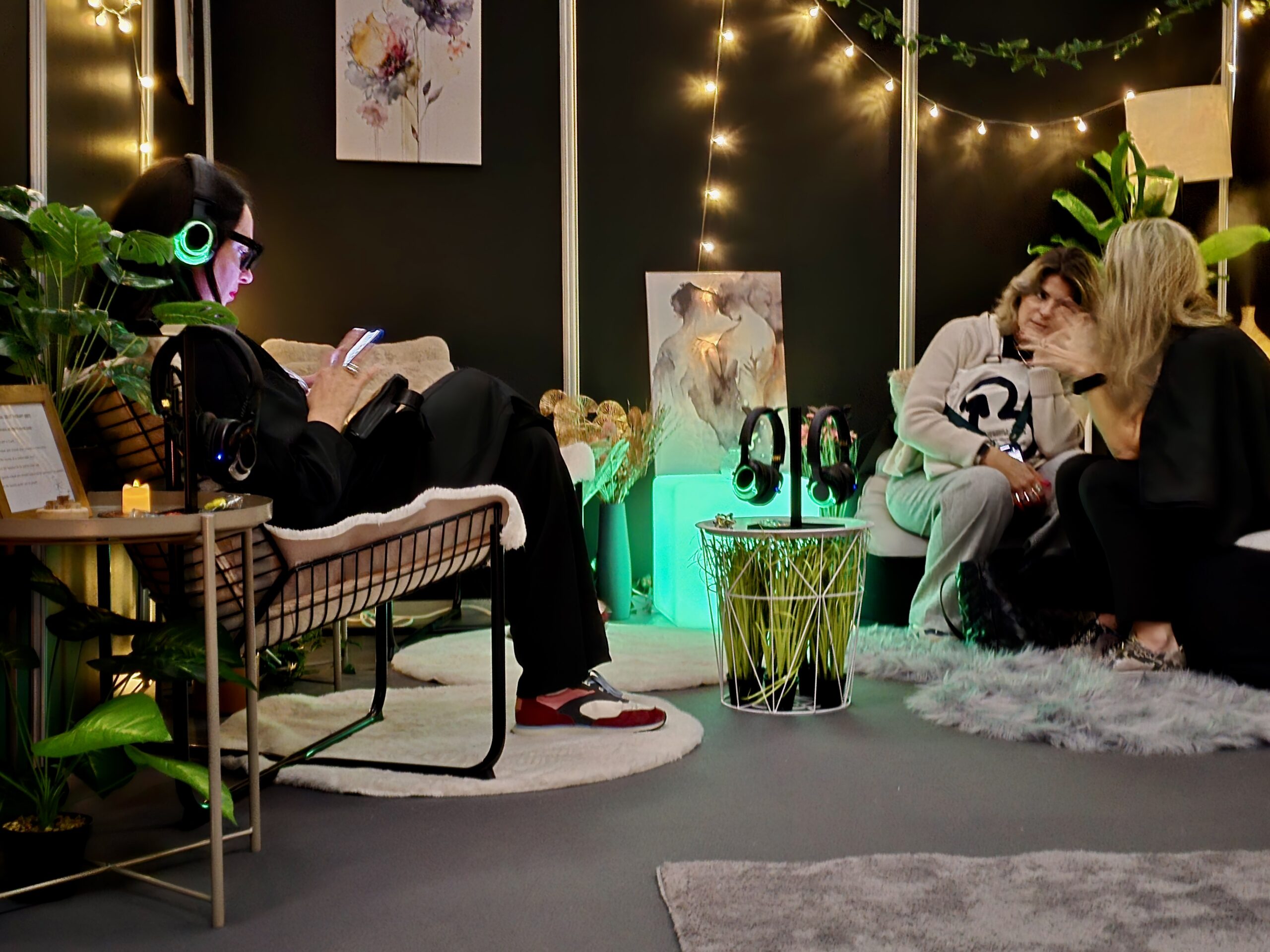
What Actually Happens When a Quiet Room Exists
Calm spaces are often introduced in response to the needs of neurodivergent attendees. That’s a valid and important starting point. But once the room is open, something unexpected happens every single time.
It turns out quiet rooms aren’t niche at all:
- Speakers use them to centre themselves before going on stage
- Crew members retreat there to recover during long, relentless shifts
- Parents find a rare moment of stillness in an overwhelming day
- Introverts recharge before heading back into networking rooms
- CEOs step in quietly to reset before a high-stakes conversation.
What starts as a “specialist provision” becomes, almost immediately, one of the most used spaces at the entire event. Because it turns out that nervous systems don’t care about job titles or diagnoses, they all need room to breathe.
Regulation Isn’t a Niche Need
There’s a persistent myth that calm spaces are about separating certain people from the main experience, creating a softer track for those who “can’t handle it.” This misunderstands both the science and the purpose entirely.
Calm rooms aren’t about opting out. They’re about giving everyone access to something the environment otherwise denies them: restoration.
For the overstimulated delegate, it’s the difference between leaving at 2pm and staying for the closing session. For the event organiser, it’s a measurable tool for supporting wellbeing across the whole audience. For workplaces, it’s an inclusive design feature with direct links to productivity, creativity, and culture. And for every person who steps through the door expecting it to feel clinical or strange, it’s the moment they realise calm was something they needed all along.
Every Nervous System Needs Space to Reset
At Calm Nest Collective, we design spaces built on one foundational truth: calm isn’t a special accommodation. It’s a human need.
Our Calm Nest Spaces are:
- Sensory-friendly, designed specifically for overstimulation relief in busy, high-pressure environments
- Universally inclusive, welcoming neurodivergent and neurotypical people without hierarchy or gatekeeping
- Human-centred, because the goal was never to serve a category of people. It was always to serve people.
Beyond “Other People”
Quiet rooms begin as a response to specific needs. But once they exist, they reveal something far bigger: that calm isn’t a niche, it’s a shared necessity we’ve collectively been denied in the design of our built environments.
The delegate who stepped hesitantly into that room and found it was for them too? That’s not an exception. That’s what happens every time.
A Calm Nest Space isn’t for other people. It’s for all of us.
