
When people first hear about quiet rooms at events or workplaces, a misconception often follows: that’s a space for people who can’t cope. A place to withdraw. To step aside from the real action.
That framing gets it completely backwards.
Quiet rooms aren’t about opting out. They’re about giving more people a genuine way to opt in.
Why High-Energy Environments Create Invisible Barriers
Modern events and workplaces are built for stamina. Back-to-back sessions, bright exhibition halls, constant social interaction, ambient noise from every direction, it’s a lot, even for people who thrive on stimulation.
For neurodivergent individuals, people with sensory sensitivities, or anyone navigating fatigue, anxiety, or stress, these environments don’t just feel tiring. They create real, invisible barriers to participation. The kind that don’t show up in your attendance data until you notice people slipping out after lunch, skipping networking, or not coming back on day two.
Quiet spaces directly address this. Not by removing people from the experience but by making the experience accessible to more of them.
A Bridge Back In, Not a Door Out
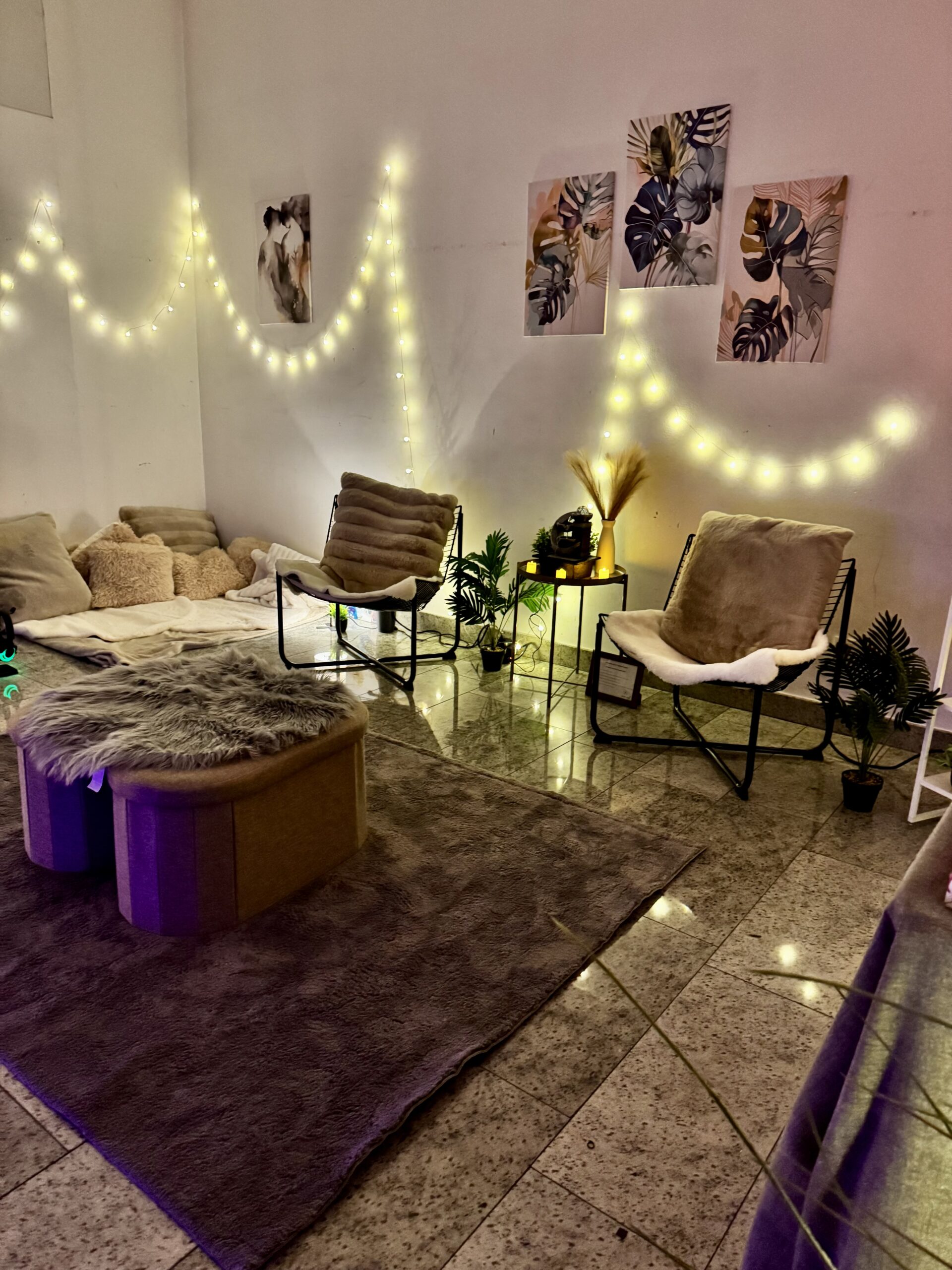
A well-designed quiet room functions as a bridge, back to the keynote, back to the conversation, back to the moment you came for.
- After resetting in a calm environment, you return to sessions ready to actually listen and absorb
- After a genuine pause, you can show up to networking with presence and energy rather than performing enthusiasm you don’t have
- At a festival, instead of leaving early from overstimulation, you recharge and rejoin, on your own terms
Inclusion doesn’t mean everyone powers through in the same way. It means everyone has a way to participate fully.
Access Is Inclusion
At Calm Nest Collective, we design quiet spaces around one core principle: inclusion isn’t just about who’s invited, it’s about who can truly take part.
Our Calm Nest Spaces are built to be:
- Neuroinclusive, accessible for people with sensory needs and diverse neurotypes
- Restorative, giving the nervous system genuine space to reset, not just a corner to hide in
- Stigma-free, welcoming everyone without questions, assumptions, or gatekeeping.
Quiet rooms aren’t a luxury add-on or a nice-to-have for progressive-sounding event programmes. They’re an essential access point as fundamental as a ramp, a caption, or a gender-neutral bathroom.
Rethinking What Participation Actually Looks Like
If we’re serious about building inclusive workplaces, events, and public spaces, we have to stop equating stamina with engagement. The person who steps away for ten minutes and returns focused is participating just as meaningfully, often more so, than the person who stayed in the room but mentally checked out an hour ago.
Designing for the full spectrum of human needs isn’t idealistic. It’s just good design.
A Calm Nest Space isn’t about opting out.
It’s about access. And access is everything.
[Find out how we can bring a Calm Nest Space to your next event →]
