
Nature has always been humanity’s most reliable reset.
Long before the science existed to explain it, people understood instinctively that stepping outside, walking among trees, sitting near water, feeling natural light on their face, made them feel better. Calmer, clearer, more themselves.
Now the science exists. And it confirms what we’ve always known, with a level of detail that makes the case for restorative design impossible to ignore.
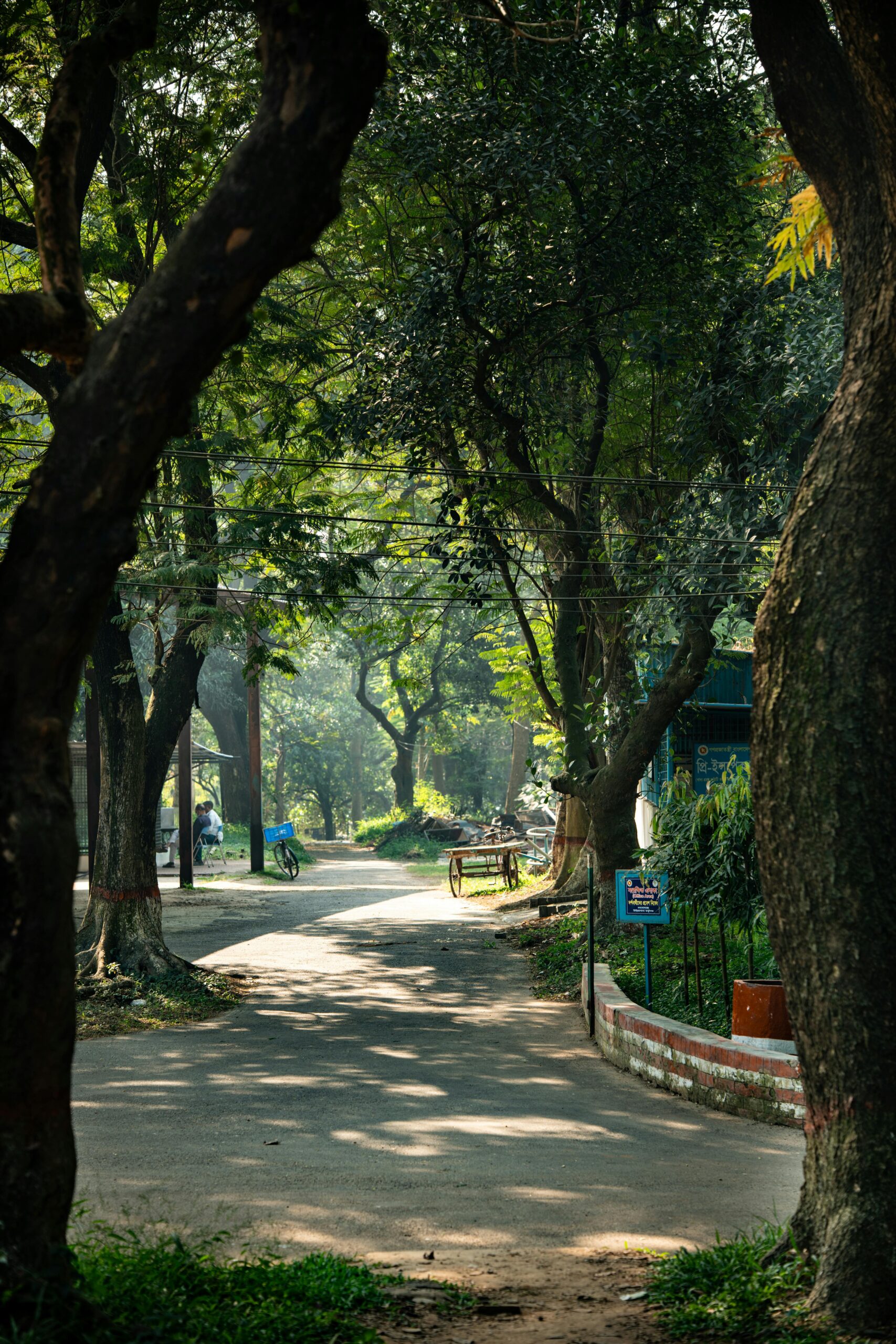
What Nature Actually Does to the Body
Natural environments trigger measurable, rapid physiological changes. Research published in Environmental Health and Preventive Medicine found that spending time in forest environments, a practice known in Japan as Shinrin-yoku or forest bathing, significantly reduces cortisol, lowers blood pressure and heart rate, and suppresses activity in the sympathetic nervous system, the system responsible for the stress response.
A landmark study by researchers at Stanford University found that a 90-minute walk in a natural setting reduced activity in the part of the brain associated with rumination, the repetitive, negative self-focused thinking linked to depression and anxiety, compared to a walk in an urban environment. The brain, quite literally, behaves differently in natural settings.
Attention Restoration Theory, developed by Rachel and Stephen Kaplan, explains why: natural environments engage what researchers call “soft fascination”, a gentle, effortless form of attention that allows the directed attentional resources used for focused work to recover. It is the cognitive equivalent of sleeping: the systems that work hardest during the day are restored during exposure to nature.
The Problem with Modern Built Environments
The challenge is that modern life has moved progressively further from the natural environments our nervous systems evolved within. Open-plan offices, conference centres, airport terminals, urban campuses, these spaces are defined by artificial lighting, hard surfaces, synthetic materials, and acoustic environments that bear little resemblance to the natural world.
The consequences are measurable. Studies on workplace environments consistently link low levels of natural light, limited greenery, and high sensory stimulation to elevated stress, reduced wellbeing, and higher rates of disengagement and burnout. We have built environments that are profoundly efficient for some purposes and profoundly unsupportive of the human beings who inhabit them.
Bringing Nature’s Principles Indoors
The good news is that biophilic design, design that incorporates the principles and elements of natural environments, produces many of the same restorative benefits as access to nature itself. Natural materials, organic textures, living plants, natural light or warm light that mimics it, water features, and earthy colour palettes all activate the same neurological pathways as outdoor natural environments.
Research from the Human Spaces report, which surveyed over 7,600 workers across sixteen countries, found that employees in offices incorporating natural elements reported 15% higher wellbeing, 6% higher productivity, and 15% higher creativity than those in environments without them. These are not marginal improvements. They are significant, measurable outcomes driven by design choices.
How Calm Nest Collective Applies This
At Calm Nest Collective, biophilic and nature-inspired design is a core element of our Calm Nest Spaces®. We draw on the principles of restorative environment design, natural textures, warm lighting, organic forms, sensory grounding elements — to create indoor spaces that activate the same calming neurological response as stepping outside.
In the middle of a three-day conference, a demanding office week, or a busy university campus, a Calm Nest Space® gives people access to the restorative power of nature without requiring them to leave the building. Because the benefits of natural calm shouldn’t be reserved for those who can step outside. They should be built in.
Bring the restorative power of nature into your space. [Talk to Calm Nest Collective →]
