
64.5% of people say a quiet zone allows them to stay at an event longer and participate more fully.
That is a remarkable statistic for something that costs relatively little to implement. A quiet zone is not a corner with a beanbag. A well-designed one actively restores people’s capacity to engage. Here is how to build one that works.
Choose the Right Space
Ask your venue for recommendations. They know their building better than you do. Look for a room that is genuinely insulated from noise, not just physically separate from the main space, but acoustically quiet. A glass partition next to a loud exhibition floor is not a quiet room.
Position it close enough to the main event that using it does not mean missing a session. Make it easy to reach. Keep it dedicated, not multi-purpose. A quiet room that also serves as a prayer room, nursing room, or speaker prep area loses its core function.
Furnish It Thoughtfully
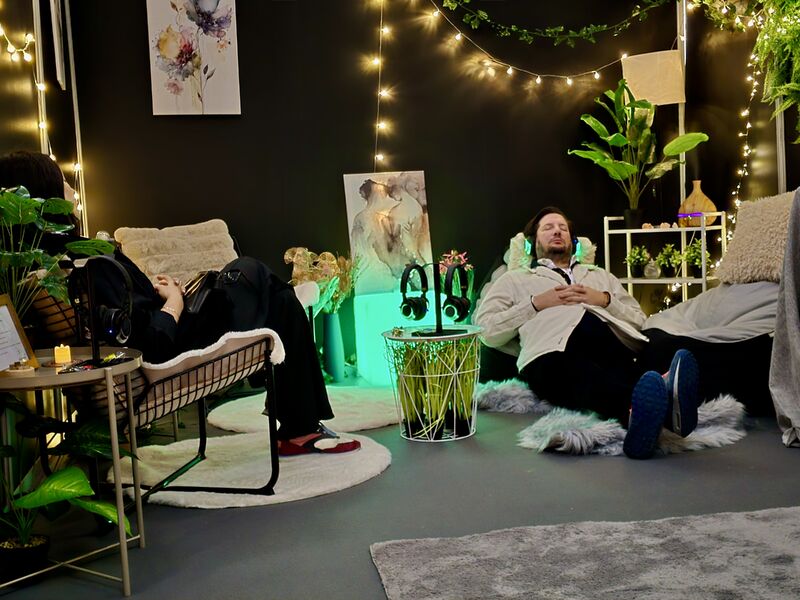
The design of the space sends a signal. A bare room with a single chair says: this was an afterthought. A thoughtfully furnished room says: we designed this for you.
Include:
- Comfortable seating at a range of heights, beanbags, soft chairs, floor cushions
- Weighted blankets and tactile items such as stress balls and fidget tools
- Soft, warm lighting ,avoid overhead fluorescents entirely
- Water and simple snacks
- A no-phones, no-talking policy, clearly but kindly communicated.
Calming visual elements make a meaningful difference to how the space feels.
Promote It Actively
A quiet room that no one knows about helps no one. Mention it in your welcome address. Include it on your event map and app. Reference it in your pre-event communications. Make it clear it is open to everyone, no permission, no questions, no stigma.
Offer sensory bags at registration that attendees can carry into the main event space. Include earplugs, sunglasses, a fidget tool, and a card showing the quiet room’s location.
Staff It Well
Place a trained, calm member of staff nearby, not inside the room, but available. Brief them on how to welcome attendees without assumptions, how to recognise signs of distress, and how to offer support without being intrusive.
At Calm Nest Collective, designing quiet rooms and Calm Nest Spaces is our specialism. We handle the design, the furnishing, the staffing brief, and the communication strategy, so you can focus on the rest of your event.
