
Most event planners treat signage as decoration. For many attendees, it is the difference between participation and panic.
Clear wayfinding reduces cognitive load. It lets people navigate independently. It removes the anxiety of not knowing where to go which matters enormously for neurodivergent attendees, those with anxiety, and anyone who finds asking for help difficult.
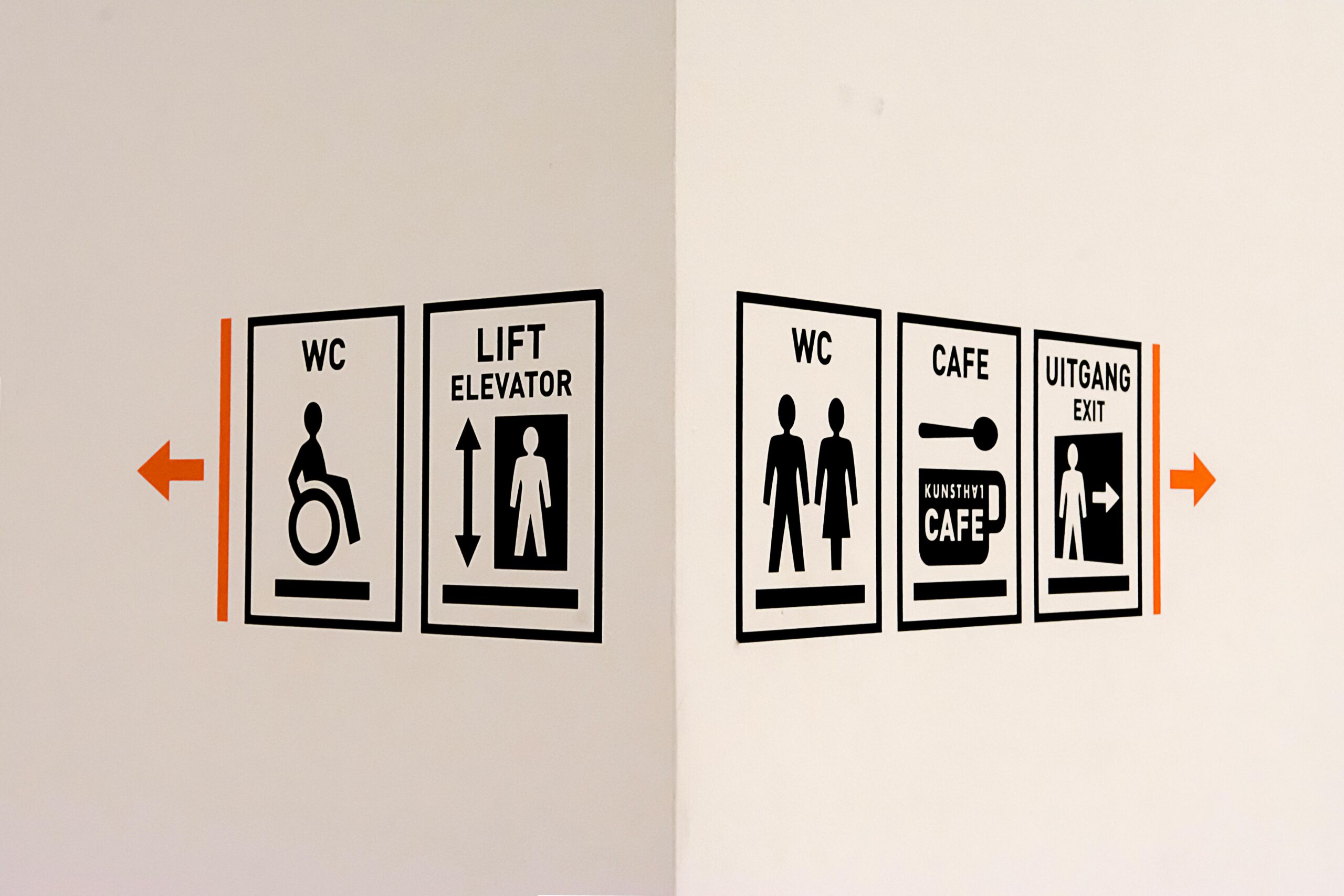
The Problem with Most Event Signage
Event signage is too often designed for aesthetics rather than function. It uses decorative fonts that are hard to read. It puts too much information on a single sign. It is positioned inconsistently so people don’t know where to look. And it rarely points to the places that matter most, the quiet room, the accessible toilet, the exit.
Signage is not dressing. It is infrastructure.
What Good Signage Looks Like
Follow these principles at every event:
- Use a sans-serif font, Arial is widely recommended for readability
- Design with appropriate colour contrast, test using accessibility tools before the event
- Include only essential information, clutter defeats the purpose
- Position all signs consistently, either to the left or right of the attendee journey, never both
- Include clear directions to lifts, accessible toilets, catering, the Calm Nest Space®, and exits
- Warn attendees in advance about areas with loud noise, bright lights, or photography
Sensory Maps. Still Underused, Hugely Valuable
A sensory map tells attendees what to expect before they arrive. It covers noise levels in different areas, lighting conditions, crowd density at different times of day, and the location of calm spaces.
This is one of the most valuable pre-event tools available and one of the least used. It takes little time to create. For attendees with autism, anxiety, or sensory processing differences, it removes a major barrier to attending at all.
Share it in joining instructions, on your event app, and at registration. Make it available digitally and in print.
Supplement Signage with People
Trained stewards positioned at key decision points, entrances, lift lobbies, junctions between spaces, guide, escort, and support attendees who need help navigating. They do not replace signage. They complete it.
At Calm Nest Collective, we include wayfinding and sensory mapping in our inclusive event design service, because how people find their way through your event shapes their entire experience of it.
