
When we think about great design, we tend to picture visual impact, striking architecture, bold interiors, spaces that stop people in their tracks. But what if design could do something far more meaningful than impress? What if it could actively support the people inside it?
That question sits at the heart of architectural psychology and it’s quietly reshaping how we think about schools, hospitals, workplaces, and events.
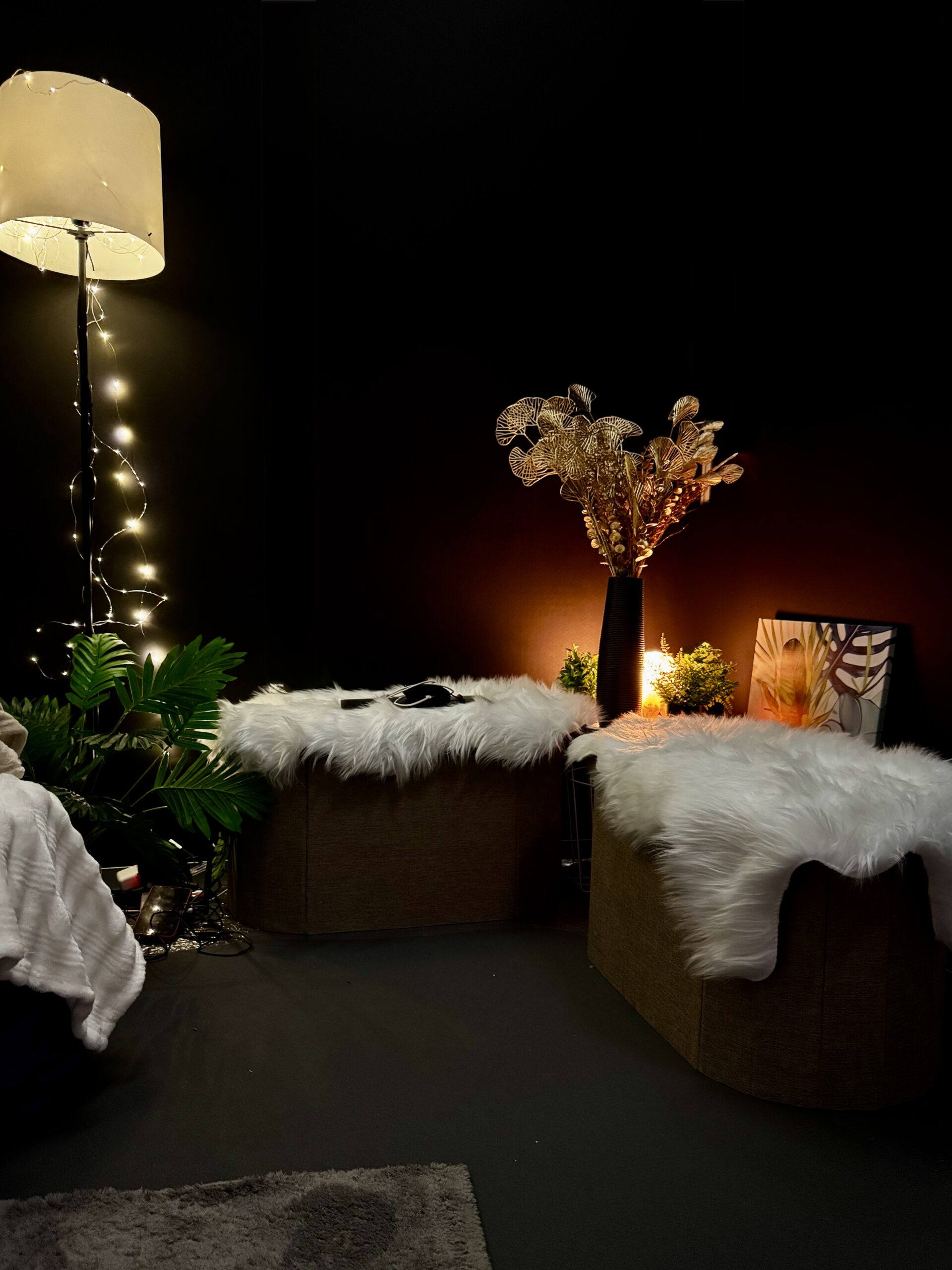
What the Science Tells Us
Environmental and architectural psychology make one thing clear: the spaces we inhabit directly shape how we feel, think, and behave. This isn’t abstract theory, it’s measurable:
- Curved shapes and organic layouts reduce anxiety and support relaxation
- Natural light improves mood, regulates circadian rhythms, and sharpens focus
- Biophilic design, plants, natural textures, organic materials, measurably lowers stress and blood pressure
- Hospitals integrating daylight, greenery, and wood finishes report faster patient recovery times than traditionally sterile environments.
Our bodies and minds respond to environments that feel natural, safe, and human-centred. The design choices made around us are never neutral.
Healing Design Belongs Everywhere
The problem is that restorative design has largely been confined to healthcare settings, as though only hospitals need to support human wellbeing. But we spend the majority of our lives in schools, offices, airports, and event venues. These spaces shape us too, whether they’re designed with that in mind or not.
Imagine instead:
- A workplace where calming textures and considered lighting make employees more creative, focused, and resilient
- An event where a sensory-friendly quiet lounge gives attendees space to regulate and return with renewed energy
- A classroom where the physical environment itself helps children feel safe and ready to learn.
This isn’t aspirational. It’s evidence-based design with documented, measurable outcomes and it’s available right now.
How Calm Nest Collective Applies This
At Calm Nest Collective, we bring the science of supportive design into events, workplaces, schools, and public venues through our Calm Nest Spaces®. Every space we create is built on three core principles:
- Neuroinclusion, thoughtful design that genuinely welcomes neurodivergent individuals, not just in policy but in practice
- Wellbeing, reducing overstimulation, stress, and burnout through the environment itself
- Sustainability, ensuring every design choice is environmentally responsible as well as human-centred.
The goal was never simply to create beautiful spaces. It’s to design environments that restore nervous systems, unlock creativity, and make inclusion something people can actually feel.
From Impressive to Human-Centred
Design will always have the power to impress. But when it also supports, regulates, and restores, it becomes something far more valuable, a genuine catalyst for human potential.
The future of design, whether in schools, offices, festivals, or public spaces, must be measured not just by how spaces look, but by how people feel inside them.
That’s the standard we build to. One space at a time.
[Find out how Calm Nest Collective can bring restorative design to your environment →]
