
Of everything in the body, breath is the one process that runs entirely automatically and is also entirely under conscious control. That makes it one of the most powerful, accessible tools anyone has for managing anxiety in real time, no equipment, no appointment, no cost.
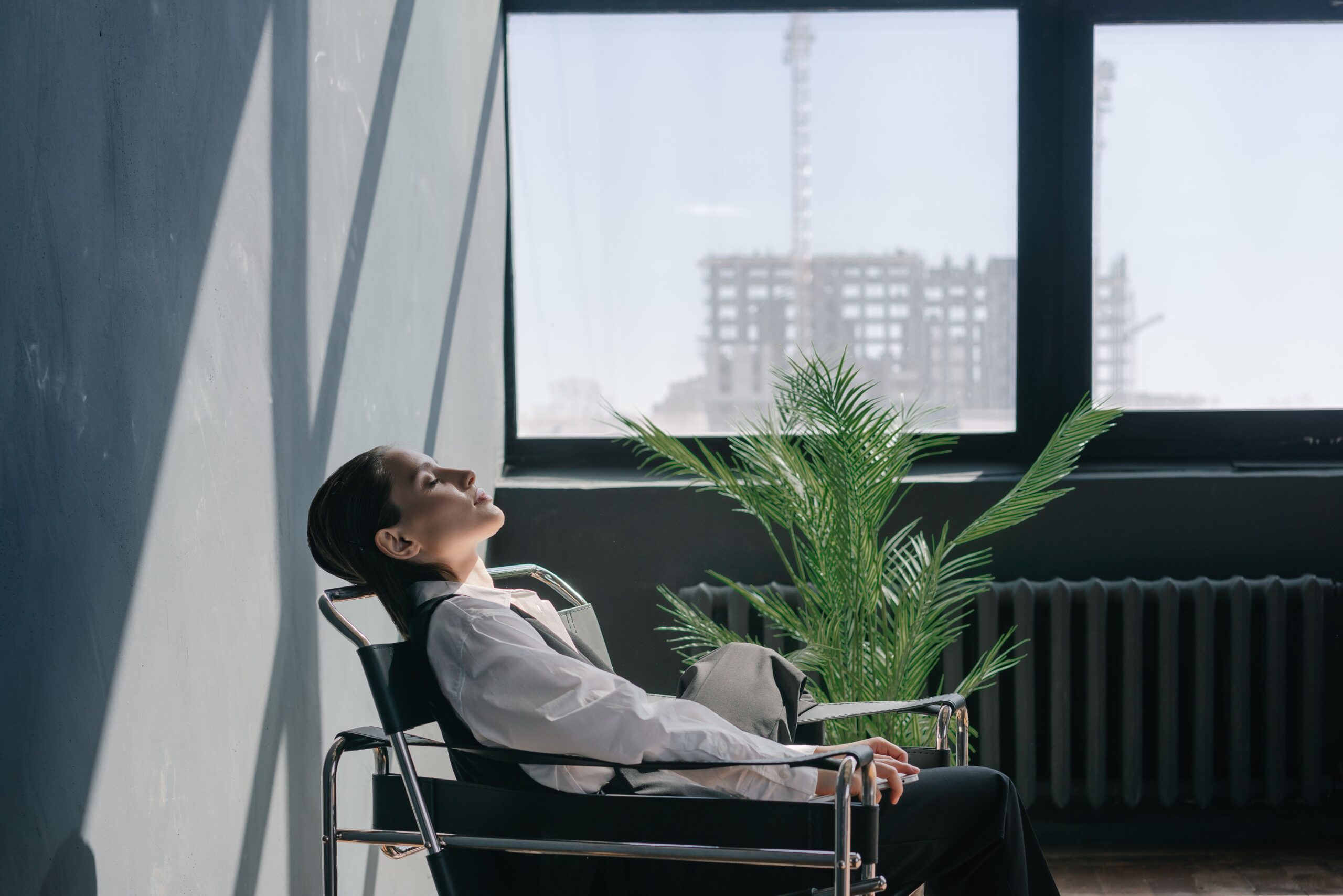
Understanding the Two Branches of Your Nervous System
The autonomic nervous system has two main branches. The sympathetic branch, the fight, flight, freeze, or flop system, prepares the body for action: increasing heart rate, releasing stress hormones like adrenaline and cortisol, and dilating the pupils. The parasympathetic branch has the opposite effect, slowing the body down, lowering heart rate and blood pressure, and promoting rest, digestion, and recovery.
Managing anxiety and stress largely comes down to being able to consciously activate the calming parasympathetic pathway and breath is one of the most direct routes to doing that.
Extending the Exhale
Extending the out-breath directly engages the parasympathetic nervous system. There are many accessible ways to practise this: making a long “shhh” sound on the exhale, humming or toning a long “aaahhh,” exhaling through pursed lips as though cooling a spoonful of soup, or simply counting slowly and clearly from one to ten until the breath runs out. Any of these, repeated for a few minutes, can measurably shift the body’s stress response.
Coherent Breathing
Breathing at a rhythm of around five breaths per minute, roughly six seconds in, six seconds out, is considered an optimal rhythm for rebalancing the body and accessing a state that is both peaceful and alert. Starting with three seconds in and three seconds out and gradually extending the count makes this approachable for anyone, regardless of experience. Even a single minute of coherent breathing has been shown to help lower cortisol levels and stabilise heart rate.
Diaphragmatic (Belly) Breathing
Breathing slowly into the belly rather than the chest is another effective technique. Lying down with a book placed on the belly and watching it rise and fall with each breath gives a simple visual cue for correct technique, useful for anyone learning to notice where their breath naturally goes under stress.
Why This Matters for Events and Workplaces
Breathwork requires no special equipment and can be practised discreetly, in a meeting, at a desk, or in a quiet corner of an event space. Teaching these simple techniques as part of onboarding, staff training, or attendee resources gives people a genuinely useful tool they can use the moment they need it, not just when a formal support system is available.
At Calm Nest Collective, we incorporate breathwork guidance into our Calm Nest Spaces® and wellbeing training, because sometimes the most powerful intervention is one that’s already built into the body.
Give your team and attendees tools they can use anywhere. [Talk to Calm Nest Collective →]
