
When we talk about neuroinclusive design, the conversation often centres on a specific group of people.
Those with autism. Those with ADHD. Those with sensory processing differences or anxiety conditions. And yes, these communities have been calling loudest and longest for environments that actually consider their needs, because for them the stakes are highest and the barriers most acute.
But here’s what consistent experience and a growing body of research both confirm: neuroinclusive design benefits everyone. Not as a side effect. As a central outcome.
The Group That Keeps Getting Left Out
Despite decades of progress in accessibility legislation and inclusive design guidance, neurodivergent individuals remain consistently underserved by the built environments they’re expected to navigate every day.
Bright, flickering fluorescent lighting. Open-plan spaces with no acoustic management. Crowded layouts with no clear routes or quiet corners. Fast-paced, high-stimulation environments with no provision for regulation or recovery. For neurotypical people, these environments can be tiring and distracting. For neurodivergent people, estimated to comprise 20% of the global population, they can make full participation genuinely impossible.
This isn’t intentional exclusion. It’s design that simply hasn’t considered the full range of human neurological experience. But the effect is the same: neurodivergent people are quietly, systematically excluded from the spaces, events, and workplaces that were supposedly designed for everyone.
What Neuroinclusive Design Actually Looks Like
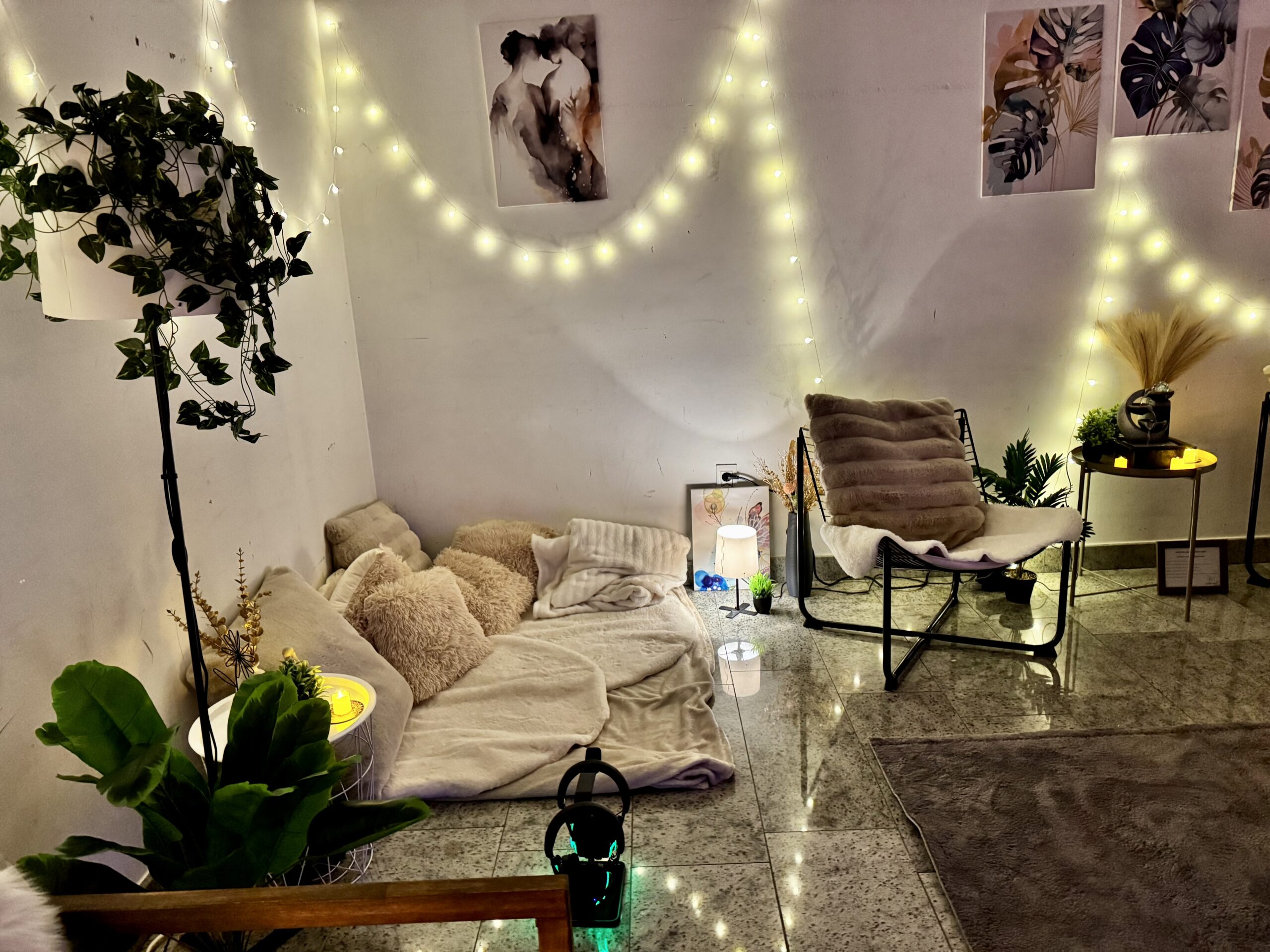
Neuroinclusive spaces don’t require architectural overhaul or significant budget. They require intentionality, a genuine commitment to designing for a wider range of sensory and cognitive experiences from the outset.
In practice, this can mean:
- Softer, adjustable lighting that reduces visual overstimulation
- Acoustic management that dampens background noise without creating eerie silence
- Clearly defined quiet areas where people can step away and regulate
- Uncluttered, intuitive layouts that reduce cognitive load and navigation anxiety
- Sensory grounding tools, weighted objects, tactile materials, fidget tools. available without stigma.
These aren’t specialist provisions for a minority. They are design improvements that make spaces more comfortable, more accessible, and more functional for everyone who uses them.
Better Spaces for Every Brain
The evidence on this is consistent and compelling. Calmer environments improve concentration and cognitive performance across neurological profiles. Reduced sensory noise benefits people managing anxiety, fatigue, chronic pain, and stress, conditions that affect a significant proportion of any given workforce or event audience.
Research on workplace design shows that employees in thoughtfully designed, lower-stimulation environments report higher job satisfaction, lower stress, and stronger performance outcomes. Studies on event design show that attendees in environments with sensory-friendly provisions stay longer, engage more deeply, and rate their experience more highly.
Neuroinclusive design doesn’t create a better space for some people at the expense of others. It creates a better space. Full stop.
How Calm Nest Collective Applies This
At Calm Nest Collective, neuroinclusion is not an add-on or an afterthought. It is the foundation of every Calm Nest Space® we design. Our approach draws on environmental psychology, sensory design principles, and deep knowledge of neurodivergent experience to create spaces that are genuinely welcoming to every brain type. not just the ones that have historically been catered for.
We work with event organisers, employers, universities, and public venues to embed neuroinclusive thinking into the design of their spaces, because inclusion should be visible, practical, and felt by every person who walks through the door.
Let’s design a space that works for every brain. [Get in touch with Calm Nest Collective →]
